What it is
A Truck Loading Skid is an integrated, skid-mounted module that combines process piping, valves, filtration/deaeration (optional), flow metering, batch control (Batch Controller/PLC), and ESD safety interlocks in one engineered package.
Instead of building everything on site, most work is completed in the factory with FAT (Factory Acceptance Test)—so your terminal can commission faster with fewer uncertainties.
CTA buttons (suggested):
Request a Proposal
Download Datasheet (PDF)
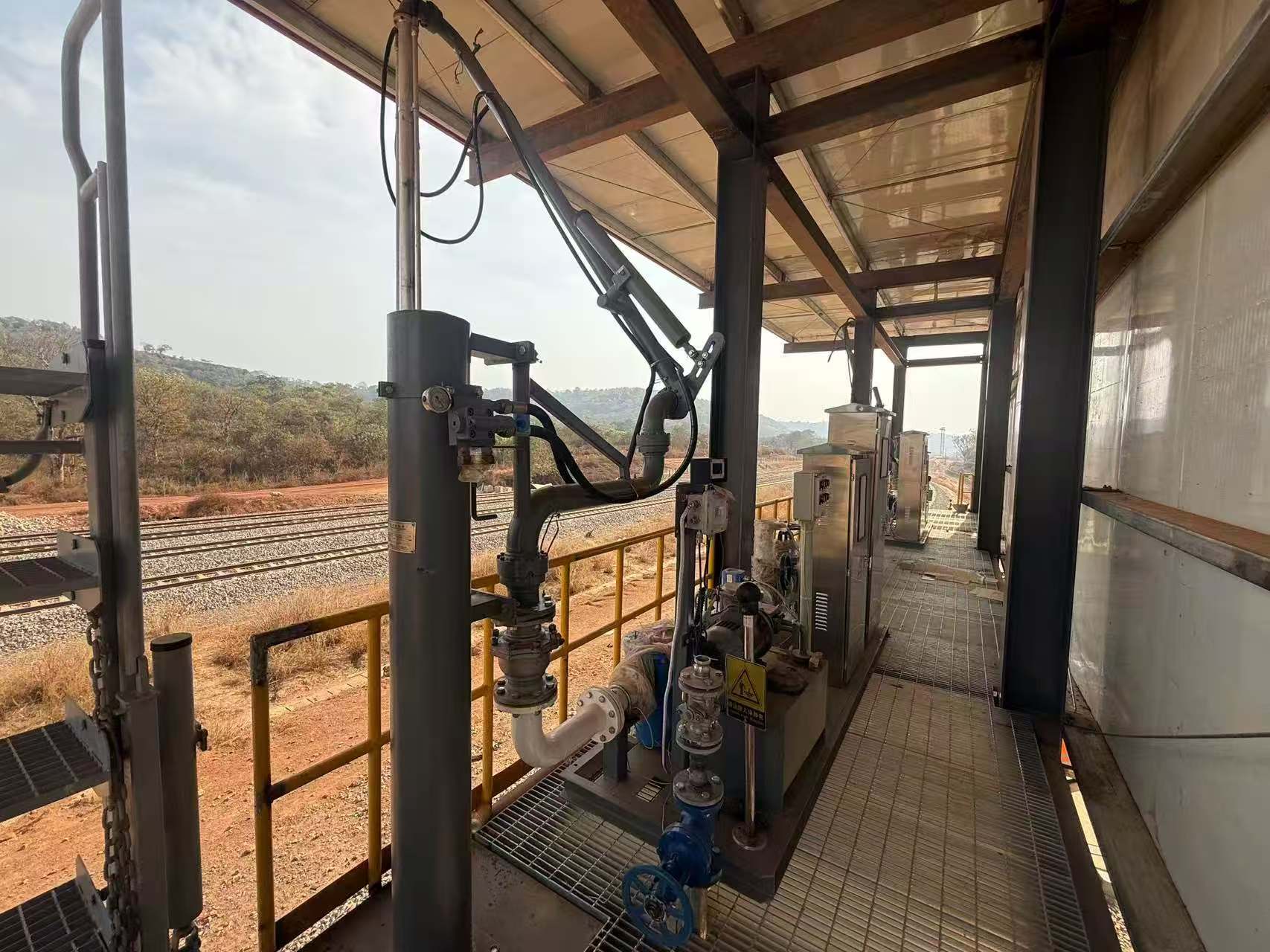
Traditional loading rack construction often faces challenges: long site schedules, many interfaces, inconsistent quality, and complex commissioning. A skid-based approach turns the loading station into a productized module.
Key benefits
Faster delivery & start-up: factory pre-assembly reduces site work to piping tie-ins and cable termination
Consistent quality: standardized fabrication, testing, and documentation for repeatable deployments
Higher safety: proven ESD logic, valve interlocks, and permissives—tested before shipment
Scalable design: start with 2-bay and expand to multi-bay by adding modules
Ideal for remote/overseas projects: minimizes dependency on local construction capability
A typical loading skid includes:
Inlet/outlet piping, bay switching manifold
Bypass, drain, vent, sampling points (as required)
Valve position feedback and fail-safe actuation options
Metering is selected based on product, viscosity, temperature range, accuracy, and local standards:
Flow meter options: PD / Turbine / Coriolis / Ultrasonic (project-based selection)
Temperature & pressure signals for compensation (when required)
Signal acquisition, totalization, batch records, and audit-ready reporting
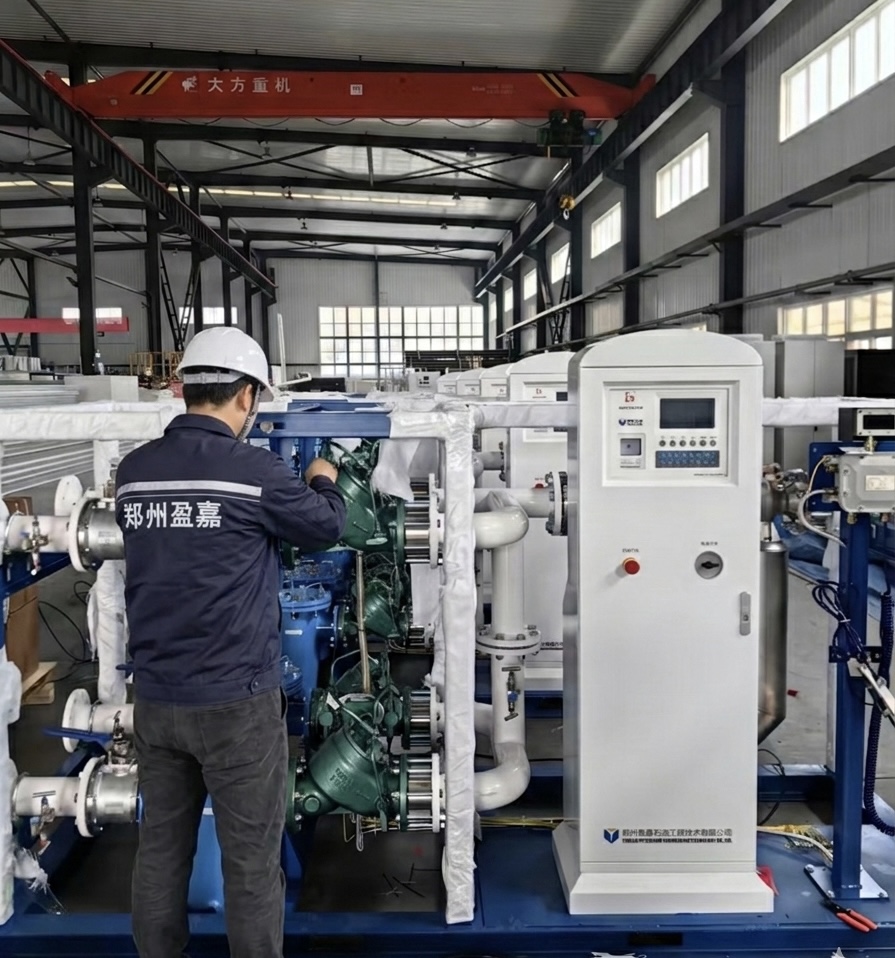
Batch Controller or PLC for preset loading, multi-stage control, and automatic shutdown
HMI options (local panel / kiosk / integrated rack HMI)
Communications for integration with SCADA / ERP / TMS (protocols per project)
Loading is a high-risk operation point. The skid consolidates and standardizes safety logic:
ESD Emergency Shutdown: local/remote trigger, pump trip, valve close, alarms
Static Grounding Monitoring: permissive to start; immediate shutdown on loss of grounding
Pressure/flow abnormal protection (as configured)
Valve interlocks to prevent wrong-line alignment or product mixing (project-based)
A cost-effective standard for many depots and terminals:
Two independent loading lines (parallel bays)
Preset quantity loading with coarse/fine control (fast/slow fill to cut over and stop)
Easy upgrade path to 3-bay/4-bay expansions
For peak loading demand and multi-product operations:
Multiple bays for higher throughput
Role-based permissions, recipes, order download, and batch traceability
Designed for “copy-and-deploy” expansion across multiple sites
Need quick sizing?
Provide product type, required flow rate per bay, number of bays, and custody transfer requirements—we’ll propose a fit-for-purpose configuration.
A predictable project path that reduces schedule risk:
Engineering: P&ID, I/O list, interlock logic, materials & hazardous area classification
Factory Integration: manifold fabrication, instrumentation, panel assembly, loop checks
FAT: interlock simulation, metering signal verification, communications test, documentation package
Site SAT/Commissioning: skid installation, tie-ins, cable termination, system integration, performance verification
Training & Support: operator training, maintenance guidance, spares recommendation (optional remote support)
Fuel depots and oil terminals (gasoline, diesel, jet fuel)
Chemical terminals and tank farms (multi-product loading)
Logistics parks with high truck-loading throughput
Remote and overseas sites where construction resources are limited
Complete truck loading skid engineering and fabrication
Batch control logic (preset loading, staged control, alarms, interlocks)
Custody transfer metering design and batch records
SCADA/ERP/TMS integration for order-to-billing data flow
Commissioning, training, and lifecycle support
(You can insert your company name / logo section here.)
Q1: Can you supply 2-bay and multi-bay systems?
Yes. We deliver 2-bay as a common baseline and scale to multi-bay depending on throughput.
Q2: Is the metering suitable for custody transfer?
It can be designed to meet custody transfer requirements based on product, accuracy, and local standards.
Q3: Can it integrate with our existing SCADA/ERP?
Yes. We map signals and data and integrate using project-defined protocols and point lists.
Q4: How much does it reduce on-site work?
Most piping/instrumentation/control integration is completed in the factory; on site we focus on tie-ins and acceptance testing, improving schedule certainty.
To receive a tailored proposal, please share:
Product(s) and temperature range
Flow rate per bay and total bays (2-bay / multi-bay)
Custody transfer accuracy requirement (if applicable)
Hazardous area classification / site standards
Integration needs (SCADA/ERP/TMS)
Email:328712879@qq.com
Copyright © Zhengzhou Yingjia Petroleum Engineering Technology Co., Ltd.
Tel: +86-13592665805 +86-13733868700 Whats App: 13733868700
Addr: No. 9 Changchun Road, High tech Development Zone, Zhengzhou City (450001)

